




KEYNOTE
BUILT FOR UNCERTAINTY.
Leading Teams That Move Forward in a World That’s Changing Faster Than Ever
The best leaders don’t wait for certainty to arrive. They build teams that keep moving without it.
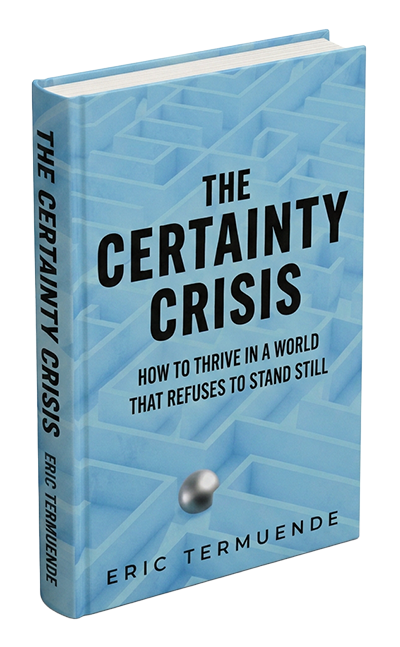
This keynote introduces content from Eric’s new book.
THE BIG IDEA
In a world that’s changing faster than ever before, The old playbook of setting the target, building the plan, and pushing the team toward it quietly becomes a liability.
Teams lose faith in goals that no longer match reality, and leaders lose credibility every time they change course. Built for Uncertainty shows leaders how to give their people a direction they can rally around when the destination is unknown, how to lead change without eroding trust, and how to build teams that are not just resilient through uncertainty but genuinely energized by it.
keynote description
When the future stops being predictable, most leaders reach for the only playbook they know: Set the target, build the plan, and push the team toward it. But in a world that changes faster than any plan can keep pace with, that playbook quietly becomes a liability. Teams lose faith in goals that no longer match reality, leaders lose credibility every time they change course, and the whole organization waits for a certainty that simply isn’t coming.
Workplace culture and leadership expert Eric Termuende has spent nearly a decade studying what separates the leaders whose people run for the exits from the leaders whose people pull together and move forward. The difference isn’t sharper forecasting. It’s the ability to lead by direction rather than locking a team to a destination. It comes down to three shifts: setting a direction the team can rally around, building a team identity around where it’s going instead of defending what worked last year, and making the small, deliberate One-Degree moves that let a team course-correct without it ever looking like failure.
In this high-energy, actionable keynote, leaders learn how to give their people a sense of direction when the destination is unknown, how to lead change without eroding trust, and how to build teams that are not just resilient through uncertainty but genuinely energized by it. Eric arms attendees with practical tools they can use immediately: a bearing check for staying honest in motion, a way to price the cost of waiting, and a method for turning small experiments into a team-wide habit of progress. The best leaders don’t wait for certainty to arrive. They build teams that keep moving without it.
THE AUDIENCE WILL LEAVE WITH:
- How to lead by direction when the destination keeps changing
- The three shifts that move a team from anxious to unwavering through change
- How to change course without it looking like failure or eroding trust
- A method for building a team identity that holds through change
- How to turn One-Degree shifts into a team-wide habit of progress
- The questions that tell a team, mid-journey, whether to hold the bearing or change it
AUDIENCE
THIS KEYNOTE SERVES LEADERS AND TEAMS
WHO ARE:
Suggested Event Formats
While Eric carefully customizes this keynote for every event, Built for Uncertainty has proven highly effective in the following formats:
DURATION:
45- to 60-minute keynote | 90 minutes with Q&A | Half-day or full-day workshop
CUSTOMIZATION:
Fully adapted to your industry, organizational context, and the specific changes your teams are navigating. Includes a pre-event discovery session with Eric.
VIRTUAL:
Available in a fully redesigned virtual format, not a Zoom version of the in-person session
ADD-ONS
Can be paired with bulk copies of The Certainty Crisis (April 2027), post-session workshops, or a multi-session leadership program. Events booked ahead of the book’s release can have copies timed to arrive with the launch.
WHAT CHANGE FATIGUE IS ACTUALLY COSTING TEAMS
The volume of change teams are being asked to absorb has exploded. Gartner found that the average employee experienced ten planned enterprise changes in a single year, up from two just six years earlier. And the workforce has hit a wall: over the same period, employees’ willingness to support organizational change collapsed from 74% to 43%. More recent Gartner research puts the picture in even starker terms, finding that 79% of employees now have low trust in their organization’s ability to change effectively.
This is the environment every leader now operates in. Announce a new target, and a fatigued team hears another plan that won’t survive the quarter. Change course, and they hear another broken commitment. The old playbook doesn’t just underperform in this environment. It actively burns the trust a leader needs most.
The upside is just as measurable. Gartner found that organizations with better-than-average healthy change adoption report two times higher year-over-year revenue growth. Teams that move well through uncertainty aren’t just more pleasant to lead. They are a compounding competitive advantage. Built for Uncertainty is about building one.
WHY CHANGE MANAGEMENT ISN’T ENOUGH
Most organizations respond to change fatigue with change management: communication cascades, town halls, transition plans, stakeholder maps. These have value. But they share a hidden assumption: that change is an event to be managed, with a before, a during, and an after. Get the team through it, and things stabilize.
That assumption no longer holds. Changes today are continuous, stacked on top of one another, and often driven by forces outside the organization entirely. There is no “after” to manage toward. A team that needs a formal change program every time the ground shifts will spend its entire existence in transition, and its leaders will spend their credibility re-justifying each new destination.
The alternative is not better change management. It is a team built for uncertainty in the first place: one that is anchored to a direction rather than a destination, whose identity is built around where it’s going rather than what it’s leaving behind, and that course-corrects in small, deliberate moves as a matter of habit. When a team operates this way, change stops being an event that requires managing. It becomes the environment the team was built for.
THE THREE SHIFTS THAT
BUILD A TEAM READY FOR UNCERTAINTY
01
Set the Direction
Teams don’t lose faith because things change. They lose faith when the goal no longer matches reality and nobody says so. This shift shows leaders how to give their people something more durable than a target: a direction the team can rally around, one that absorbs new information and survives changed conditions. When a team is anchored to a direction, a change in plans reads as navigation, not failure.
02
Build the Identity
The strongest resistance to change is rarely laziness or fear. It is loyalty to what worked last year. This shift is about helping a team build an identity that matches where it’s going rather than defending where it’s been: recognizing when past success has hardened into present constraint, and making who the team is becoming something people want to be part of rather than something being done to them.
03
Make the One-Degree Moves
Sweeping pivots exhaust teams and erode trust. Small, deliberate One-Degree moves do the opposite: they let a team course-correct continuously without any single adjustment ever looking like failure. This shift gives leaders a method for turning small experiments into a team-wide habit of progress, along with a bearing check for staying honest in motion: the questions that tell a team, mid-journey, whether to hold the bearing or change it.
WHAT HAPPENS
IN THE ROOM
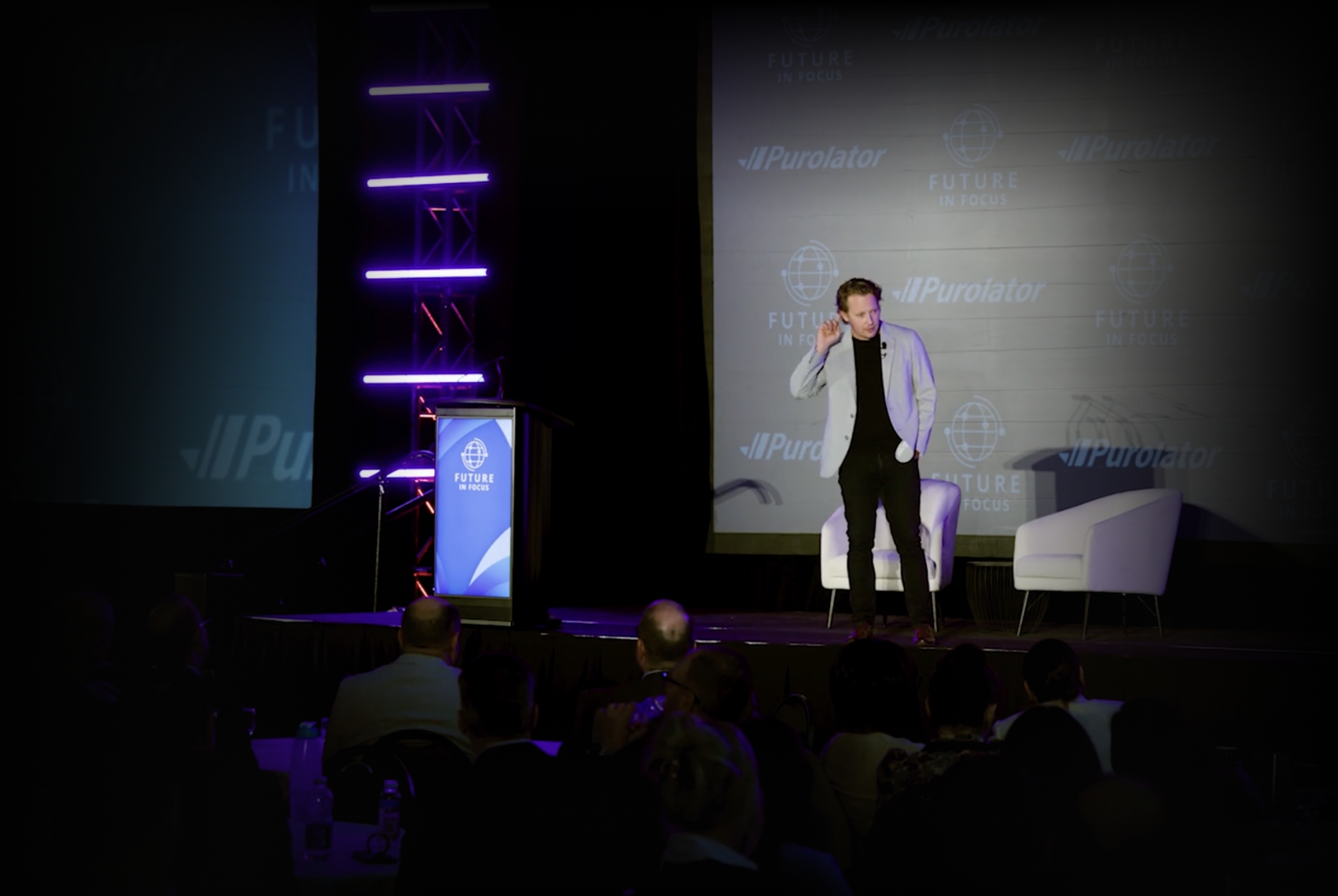
Built for Uncertainty is not a lecture, and it is not another session telling leaders to embrace change. Eric opens with a provocation that reframes why teams actually lose momentum through uncertainty, in a way most leaders in the room have never considered. The research is present throughout: specific, cited, and used to build an argument rather than fill slides. The stories come from leaders and teams who kept people pulling together when everything around them was shifting, and every session is customized to the specific changes the audience is leading through.
The most common feedback after a Built for Uncertainty session is not “that was inspiring.” It is “I finally understand why my team stalls when plans change, and I know exactly what to do differently on Monday.” Leaders leave with tools they can use immediately, not concepts they need a consultant to implement.
Who Needs This Session Most
1
Senior leadership teams whose strategic plans keep getting overtaken by events
2
People leaders and managers absorbing the human cost of continuous organizational change
3
Organizations in the middle of transformation: AI integration, restructuring, mergers, or new markets
4
Conference audiences in industries where the pace of change has outrun the planning cycle
5
Any leader who has watched a good team go quiet, cautious, or cynical as the changes kept coming
“Eric delivered the perfect message for our top 350+ leaders as we look to lead 10,000+ people through growth, change, and transformation. His keynote was customized, relevant, and actionable, and shared the tools and skills we need to confidently lead forward.”
STEVE MENNETO, President, Off Road, Polaris Inc.
Trusted by leaders at
























Watch Eric
SPEAK
“Stop trying to predict what the future of work looks like. Start building teams that can handle it — whatever it turns out to be. That is the only future-proofing that actually works.”
For Meeting Professionals
Frequently asked questions
What is the Built for Uncertainty keynote about?

Built for Uncertainty is a leadership keynote about creating teams that can remain aligned, trusting, and effective when plans change.
Eric Termuende shows leaders why team performance during uncertainty depends less on predicting the future and more on building the conditions that allow people to respond well together. The keynote explores how leaders can establish a clear direction, strengthen trust, reduce hesitation, and use small experiments to help teams learn and adjust.
The goal is to build a team strong enough that it does not need the future to be predictable.
Who is Built for Uncertainty designed for?
Built for Uncertainty is designed for executives, people leaders, managers, operations leaders, HR professionals, transformation teams, and organizations experiencing continuous change.
It is particularly relevant for leaders dealing with shifting priorities, AI adoption, restructuring, rapid growth, changing customer expectations, workforce disruption, or strategic uncertainty.
The keynote is well suited to leadership conferences, management meetings, company events, executive retreats, transformation programs, and organizations that need their teams to move forward even when the plan is still evolving.
How does Built for Uncertainty help leaders guide teams through change?
Built for Uncertainty helps leaders replace false certainty with clear direction, strong trust, and consistent action.
Rather than pretending to know exactly what will happen, leaders learn how to explain what matters, establish the principles guiding decisions, and create enough trust for people to act without waiting for perfect instructions.
Eric also shows how One-Degree shifts and small experiments can help teams generate information, correct course, and maintain momentum as circumstances change.
What practical framework does Eric share in Built for Uncertainty?
The keynote is organized around three leadership priorities:
- Set the direction: Give people a clear bearing even when the final destination may change.
- Build trust: Create the confidence people need to speak honestly, make decisions, and move together.
- Make the One-Degree shift: Use small, deliberate actions to learn what works and adjust quickly.
Together, these practices provide leaders with an operating system for maintaining alignment and performance during uncertainty.
What outcomes can organizations expect from Built for Uncertainty?
Audiences leave with practical strategies for improving alignment, trust, decision-making, and adaptability.
Leaders learn how to communicate direction without overpromising certainty, help teams respond more effectively when priorities change, and replace organizational hesitation with small, informed action.
The keynote is designed to help organizations reduce paralysis, strengthen leadership credibility, create faster feedback loops, and build teams capable of learning and adjusting as conditions evolve.
How is Built for Uncertainty different from Unwavering Teams?
Built for Uncertainty focuses on how a team operates when plans, conditions, and priorities are changing. Unwavering Teams focuses more deeply on the relationships, trust, empathy, and psychological safety that make sustained team performance possible.
Built for Uncertainty is the stronger fit when the central challenge is adaptability, alignment, or leading through change.
Unwavering Teams is the stronger fit when the central challenge is team cohesion, trust, communication, belonging, or interpersonal effectiveness.
How does Eric customize Built for Uncertainty?
Eric customizes Built for Uncertainty around the changes and performance pressures facing the organization.
Preparation may include conversations with senior leaders, industry research, analysis of the event’s objectives, and examples drawn from the audience’s workplace reality. Eric can adapt the keynote to address topics such as AI, transformation, growth, restructuring, shifting customer expectations, talent pressures, or changing strategic priorities.
The framework remains consistent, but the presentation is built to reflect the organization’s specific context.