





THE BIG IDEA
Uncertainty is an inevitable part of the future.
What isn’t inevitable is how our teams respond to it. Unwavering teams are resilient, highly collaborative, and even excited about change, aren’t born and they aren’t lucky. They’re built on trust, empathy, and ongoing experimentation. Unwavering teams gives audiences the playbook for building them, and shows leaders how to become the kind of leader whose team stands strong through anything the future may hold.
keynote description
Uncertainty is an inevitable part of the future. In the face of ongoing change, will we see our people running for the exits, or will they be there to support and help each other? Change is happening faster than ever before, and building unwavering teams that are resilient, ultra-collaborative, and even excited about that change has never been more important. But how do we build unwavering teams? Trust, empathy, and ongoing experimentation.
Workplace culture and leadership expert Eric Termuende has spent nearly a decade decoding exactly what creates unwavering teams: Those that are resilient, rooted in belonging, and grounded in a deep sense of safety and inclusion. These are the types of teams that thrive through change because they know that while change may be difficult, the only thing worse is standing still. Eric has created a playbook for cultivating unwavering teams, and in this session, attendees will both learn it and be able to take it home with them.
By discovering how to enhance collaboration, developing excitement for all of the possibilities experimentation yields, and deciphering the root of trust across a team, attendees will come away from this session understanding how to become incredible leaders who inspire their teams to perform at their best and stand strong through anything the future may hold.
THE AUDIENCE WILL LEAVE WITH:
- Deep knowledge about the root of collaboration and how to enhance it across the team
- Research-backed insights around trust, psychological safety, and belonging at work
- How to enhance excitement about change and how to involve the whole team in the process
- The most important question to ask to get engagement and buy-in
- Why the future is something to be excited about, not scared of
AUDIENCE
THIS KEYNOTE SERVES LEADERS AND TEAMS
WHO ARE:
The Unwavering TEAMS Playbook
01
Root the Trust
Trust isn’t a feeling that shows up on its own. It has a root system: psychological safety, belonging, and inclusivity, built through specific, repeatable leadership behaviors. This part of the playbook draws on the research to show audiences exactly where trust comes from on a team, what erodes it fastest, and what leaders can do this week to deepen it. When people feel safe and feel they belong, everything else in the playbook becomes possible.
02
Enhance the Collaboration
Great collaboration isn’t a personality trait or a seating chart. It has a root too: empathy, the genuine understanding of what teammates are carrying, what they need, and how they work best. This part of the playbook shows audiences how to strengthen collaboration deliberately, so that when change hits, the team’s instinct is to turn toward each other rather than retreat into silos.
03
Experiment Together
Teams don’t fear change. They fear change that’s done to them. This part of the playbook shows leaders how to involve the whole team in trying new things, turning experimentation from a risk into a shared source of energy and possibility. It includes the most important question a leader can ask to get genuine engagement and buy-in, and it’s how a team goes from surviving the future to being excited about it.
Suggested Event Formats
While Eric carefully customizes this keynote for every event, Unwavering teams has proven highly effective in the following formats:
DURATION:
45 to 60 minute keynote | 90 minutes with Q&A | Half-day or full-day workshop
CUSTOMIZATION:
Fully adapted to your industry, organizational context, and the specific changes your teams are experiencing. Includes a pre-event discovery session with Eric.
VIRTUAL:
Available in a fully redesigned virtual format, not a Zoom version of the in-person session
ADD-ONS
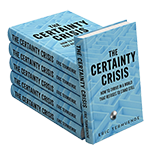
Can be paired with bulk copies of one of Eric’s books, post-session workshops, or a multi-session leadership program
THE UPSIDE OF AN
UNWAVERING TEAM

Most teams aren’t broken. They’re good: full of capable people doing solid work. The opportunity is in the gap between good and unwavering teams, and the research says that gap is enormous. Gallup estimates that if the world’s workplaces matched the engagement of today’s best-practice organizations, the global economy would grow by an additional $9.6 trillion, the equivalent of 9% of global GDP. That number isn’t a measure of what’s wrong. It’s a measure of what’s available: the discretionary energy, creativity, and collaboration that even strong teams have in reserve.
The research also shows the upside is concentrated in a single lever. Gallup finds that managers account for 70% of the variance in team engagement, and that best-practice organizations engage their managers at nearly four times the global average. In other words, the difference between a good team and an unwavering teams one isn’t headcount, budget, or luck. It’s the everyday conditions its leaders create: trust, belonging, and the shared habit of experimenting together.
That’s what makes this the most exciting investment a leader can make. A good team made unwavering teams doesn’t just hold through change. It compounds: more ideas surfaced, more energy sustained, more of the best people staying and doing the best work of their careers. Unwavering teams is the playbook for capturing that upside.
WHY
RESILIENCE TRAINING
MISSES THE POINT
When teams struggle with change, the standard response is to make individuals tougher: resilience workshops, wellness apps, stress management training. These have their place. But they rest on a quiet assumption that resilience is a personal trait, something each employee should carry alone.
A decade of studying great teams says otherwise. The people who stand strong through change are almost never standing alone. They’re on teams where trust runs deep enough that hard news travels fast, where psychological safety makes it possible to say “I don’t know” or “I need help” without penalty, and where belonging means nobody navigates uncertainty by themselves. Resilience, it turns out, is less a property of individuals and more a property of the connections between them. A team can be full of tough individuals and still shatter, and a team of ordinary people who deeply trust each other can be nearly unbreakable.
That’s the reframe at the heart of Unwavering Teams. You don’t build a resilient team by toughening people up one at a time. You build it by strengthening what’s between them: trust, empathy, and the shared habit of experimenting together. Get those right, and the team doesn’t just endure change. It starts to look forward to it.
WHAT HAPPENS
IN THE ROOM
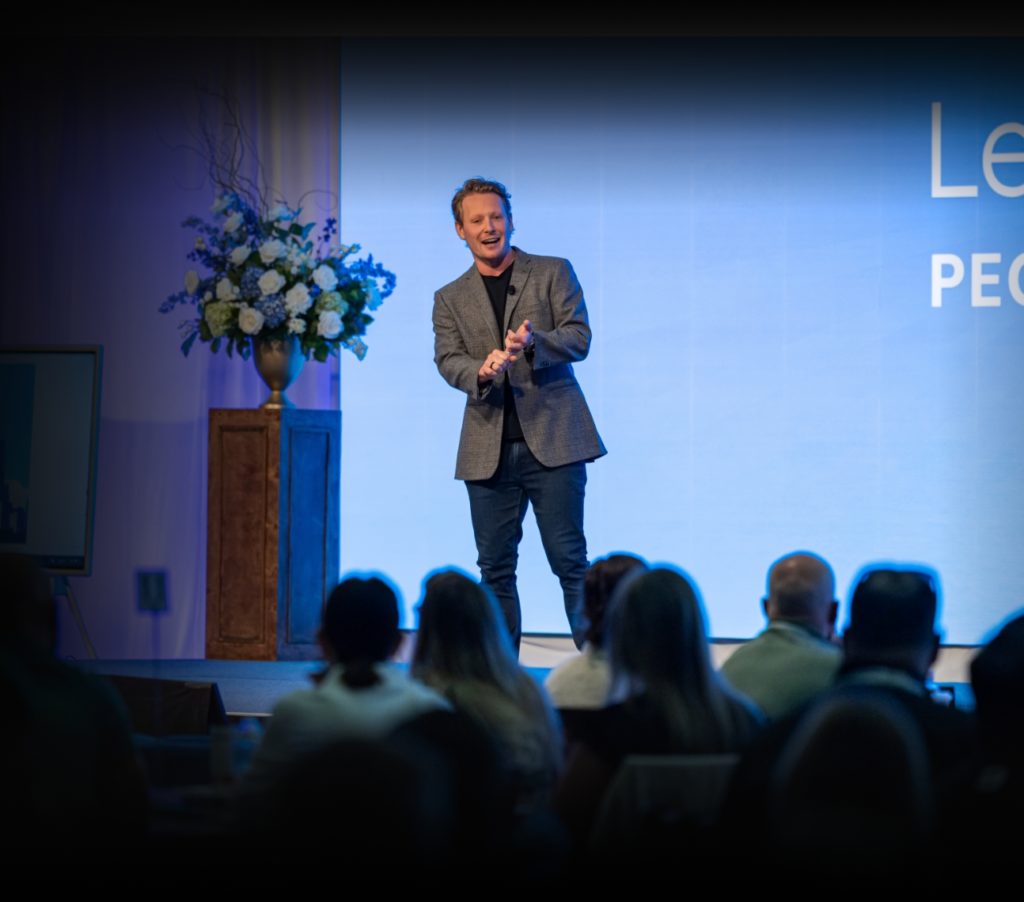
Unwavering Teams is a high-energy, deeply human session, and it’s built to move a room, not just inform it. Eric opens with a question every leader has quietly asked themselves: when change hits, will my people run for the exits, or will they hold the line together? The research is present throughout, specific, cited, and used to build an argument rather than fill slides, and the stories come from the world’s greatest teams and workplaces, tailored to the audience’s industry and moment.
The most common feedback after an Unwavering Teams session is not “that was inspiring.” It is “I know exactly what my team needs from me now, and I’m starting Monday.” Attendees leave with the full playbook in hand, and with a genuinely different feeling about the future: not something to brace for, but something their team is built for.
Who Needs This Session Most
1
Leadership teams whose people are stretched thin by the pace and volume of change
2
Managers and people leaders carrying the weight of keeping teams connected and engaged
3
Organizations where collaboration has thinned into silos, handoffs, and politeness
4
Conference audiences in industries where burnout and turnover are eroding good teams
5
Any leader who wants their team to be the one that pulls together when everything shifts
WHAT THE ROOM SAYS AFTER
“The videos, customization, and Eric’s presence, knowledge, and energy made the presentation a huge success. I’ve supported many Executive Leadership Summits over the years, and it is not often that they say, ‘This is the best Summit we’ve ever had.’ There was a lot of that feedback, and it was much deserved.”
SUSAN SCHOENBERG, Nuclear Regulatory Commission
Trusted by leaders at
























Watch Eric
SPEAK
“Stop trying to predict what the future of work looks like. Start building teams that can handle it — whatever it turns out to be. That is the only future-proofing that actually works.”
For Meeting Professionals
Frequently asked questions
What is the Unwavering Teams keynote about?

Unwavering Teams is a high-performing teams keynote about building the trust, empathy, and psychological safety required for people to perform through pressure and change.
Eric Termuende explains why strong teams are not teams that avoid disagreement, difficulty, or uncertainty. They are teams where people can communicate honestly, understand one another, contribute their best ideas, and continue improving together.
The keynote gives leaders practical ways to strengthen the relationships and working conditions that support sustainable team performance.
What makes a team unwavering?
An unwavering team has enough trust and connection to remain effective when pressure, disagreement, or change occurs.
This does not mean the team never struggles. It means people can speak candidly, ask for help, challenge ideas, learn from mistakes, and adjust without damaging the relationships that hold the team together.
Eric shows how trust, empathy, psychological safety, and ongoing experimentation help teams recover more quickly, make better decisions, and maintain performance when circumstances become difficult.
Who is Unwavering Teams designed for?
Unwavering Teams is designed for executives, managers, people leaders, intact teams, project teams, cross-functional groups, and organizations working to improve trust and collaboration.
It is especially relevant for teams experiencing rapid growth, communication challenges, organizational change, low psychological safety, siloed work, disconnection, or difficulty sustaining performance under pressure.
The keynote works well for leadership events, management conferences, team off-sites, company meetings, culture programs, and professional associations.
How does trust improve team performance?
Trust allows people to communicate more honestly, share information sooner, ask questions, admit uncertainty, and contribute ideas without excessive fear or hesitation.
When trust is low, important information can remain hidden, decisions take longer, problems grow, and people protect themselves instead of working together. When trust is strong, teams can surface issues earlier, disagree more productively, and respond to change more effectively.
Eric gives leaders practical ways to create the conditions that allow trust to grow through everyday actions and interactions.
What role do empathy and psychological safety play in strong teams?
Empathy helps team members understand how other people experience the workplace, while psychological safety gives them confidence that they can contribute without being embarrassed or punished for speaking honestly.
Together, these conditions help teams access more of their collective knowledge and experience. People become more willing to ask questions, identify risks, offer new ideas, and discuss mistakes before those mistakes become larger problems.
Eric explains how leaders can strengthen both empathy and psychological safety without lowering expectations or avoiding accountability.
What will attendees take away from Unwavering Teams?
Attendees leave with practical strategies for building trust, improving communication, strengthening empathy, and making it safer for people to contribute.
They learn how everyday leadership behaviours influence team connection, why weak signals and important information can disappear inside organizations, and how ongoing experimentation helps teams improve together.
The keynote provides leaders and team members with a shared language for discussing performance, relationships, accountability, and the conditions people need to do their best work.
Can Unwavering Teams be customized for our leadership team or organization?
Yes. Eric customizes Unwavering Teams around the relationships, communication patterns, and performance challenges affecting the audience.
Preparation may include conversations with leaders, industry research, and an understanding of the organization’s culture and current priorities. Eric can place greater emphasis on trust, psychological safety, empathy, collaboration, accountability, communication, or team resilience depending on the event’s objectives.
The presentation remains constructive and practical without exposing confidential organizational information.